

 That belief — that every student deserves to be known, supported, and fully part of a school community — is at the heart of AF Rhode Island’s approach to special education. This fall, it will take shape in a new way through the launch of the Anchor Program: a specialized classroom at AF Promesa Elementary designed for AF Rhode Island first and second graders with significant communication and developmental needs.
In a conversation with Laura Etkind, Managing Director of Special Services, and Tanya Brodd, Director of Clinical Services, both leaders described Anchor as part of a broader effort to build a stronger continuum of support for students with disabilities across AF Rhode Island. For students who use tablets, picture cards, or are still developing a reliable way to communicate, Anchor will offer a setting intentionally built around their needs, strengths, and long-term growth.
The need for Anchor reflects a real shift across AF Rhode Island. Over the past two to three years, the percentage of elementary students with disabilities has increased from roughly 9% to about 13%, while student needs have grown more complex. More students are arriving in kindergarten with significant communication needs, limited prior school experience, or support needs around foundational independence skills.
AF Rhode Island’s structure makes that work especially important. Unlike AF’s Connecticut and New York schools, where many services and supports are coordinated in partnership with local districts, AF Rhode Island is its own Local Education Agency. That means the region is directly responsible for the full continuum of special education services students may need, from related services and transportation to compliance, family partnership, and placement decisions.
For Etkind and Brodd, that responsibility is significant and central to the mission.
“We feel a tremendous commitment to inclusion,” Etkind says. “And we feel a tremendous commitment to also, if the inclusion environment isn’t the right thing for a student, what are the other environments we’re going to create for them?”
Anchor is one answer to that question. The team is clear, though, that it is not a finished answer. It is a starting point, one built with urgency, humility, and a willingness to keep learning.
For Anchor, inclusion is not a slogan or a one-size-fits-all placement. For them, inclusion means asking what each student needs in order to learn, communicate, participate, and grow — and then building the environment that makes that possible. Sometimes that means learning alongside grade-level peers. Sometimes it means a smaller, more specialized setting for a period of time. The goal is not to force one model to work for every child. The goal is to help each child build the skills, confidence, and independence to keep moving forward.
Anchor will launch with eight to ten students, allowing the team to start small, learn quickly, and build from real student data. But its vision is clear from the beginning: Anchor is designed to be a launching pad, not a landing place.
One of the program’s most intentional features is its exit criteria. From the first Individualized Education Program, or IEP, meeting, families will understand that the goal is not separation from the broader school community. The goal is growth toward a less restrictive environment, with a clear understanding of the skills each student needs to develop in order to get there.
“We do not want this to be a destination,” Brodd says. “It’s skill-based. What is this child missing in order to be successful in a general education setting?”
That framing is central to Anchor’s design. The question is not whether a student belongs in a more inclusive setting. The question is what skills, supports, and opportunities they need to be successful there. Anchor is built around the belief that the answer may be “not yet” — and that with the right support, “not yet” can become “yes.”
Day to day, inclusion will remain part of the experience. Students may join grade-level peers for lunch, specials, or specific academic blocks when appropriate. Every plan will be individualized. The goal is always to build independence, communication, confidence, and choice.
Anchor has also been built collaboratively. Etkind and Brodd have brought school-based deans into the design process from the beginning, asking them to help identify students, review data, and pressure-test which students may be the right fit. That collaboration reflects a larger commitment across AF Rhode Island: special services are not separate from the core work of teaching and learning. Students with disabilities are not “someone else’s students.” They are general education students, school community members, and learners whose needs should shape how adults plan, teach, support, and design.
That belief — that every student deserves to be known, supported, and fully part of a school community — is at the heart of AF Rhode Island’s approach to special education. This fall, it will take shape in a new way through the launch of the Anchor Program: a specialized classroom at AF Promesa Elementary designed for AF Rhode Island first and second graders with significant communication and developmental needs.
In a conversation with Laura Etkind, Managing Director of Special Services, and Tanya Brodd, Director of Clinical Services, both leaders described Anchor as part of a broader effort to build a stronger continuum of support for students with disabilities across AF Rhode Island. For students who use tablets, picture cards, or are still developing a reliable way to communicate, Anchor will offer a setting intentionally built around their needs, strengths, and long-term growth.
The need for Anchor reflects a real shift across AF Rhode Island. Over the past two to three years, the percentage of elementary students with disabilities has increased from roughly 9% to about 13%, while student needs have grown more complex. More students are arriving in kindergarten with significant communication needs, limited prior school experience, or support needs around foundational independence skills.
AF Rhode Island’s structure makes that work especially important. Unlike AF’s Connecticut and New York schools, where many services and supports are coordinated in partnership with local districts, AF Rhode Island is its own Local Education Agency. That means the region is directly responsible for the full continuum of special education services students may need, from related services and transportation to compliance, family partnership, and placement decisions.
For Etkind and Brodd, that responsibility is significant and central to the mission.
“We feel a tremendous commitment to inclusion,” Etkind says. “And we feel a tremendous commitment to also, if the inclusion environment isn’t the right thing for a student, what are the other environments we’re going to create for them?”
Anchor is one answer to that question. The team is clear, though, that it is not a finished answer. It is a starting point, one built with urgency, humility, and a willingness to keep learning.
For Anchor, inclusion is not a slogan or a one-size-fits-all placement. For them, inclusion means asking what each student needs in order to learn, communicate, participate, and grow — and then building the environment that makes that possible. Sometimes that means learning alongside grade-level peers. Sometimes it means a smaller, more specialized setting for a period of time. The goal is not to force one model to work for every child. The goal is to help each child build the skills, confidence, and independence to keep moving forward.
Anchor will launch with eight to ten students, allowing the team to start small, learn quickly, and build from real student data. But its vision is clear from the beginning: Anchor is designed to be a launching pad, not a landing place.
One of the program’s most intentional features is its exit criteria. From the first Individualized Education Program, or IEP, meeting, families will understand that the goal is not separation from the broader school community. The goal is growth toward a less restrictive environment, with a clear understanding of the skills each student needs to develop in order to get there.
“We do not want this to be a destination,” Brodd says. “It’s skill-based. What is this child missing in order to be successful in a general education setting?”
That framing is central to Anchor’s design. The question is not whether a student belongs in a more inclusive setting. The question is what skills, supports, and opportunities they need to be successful there. Anchor is built around the belief that the answer may be “not yet” — and that with the right support, “not yet” can become “yes.”
Day to day, inclusion will remain part of the experience. Students may join grade-level peers for lunch, specials, or specific academic blocks when appropriate. Every plan will be individualized. The goal is always to build independence, communication, confidence, and choice.
Anchor has also been built collaboratively. Etkind and Brodd have brought school-based deans into the design process from the beginning, asking them to help identify students, review data, and pressure-test which students may be the right fit. That collaboration reflects a larger commitment across AF Rhode Island: special services are not separate from the core work of teaching and learning. Students with disabilities are not “someone else’s students.” They are general education students, school community members, and learners whose needs should shape how adults plan, teach, support, and design.
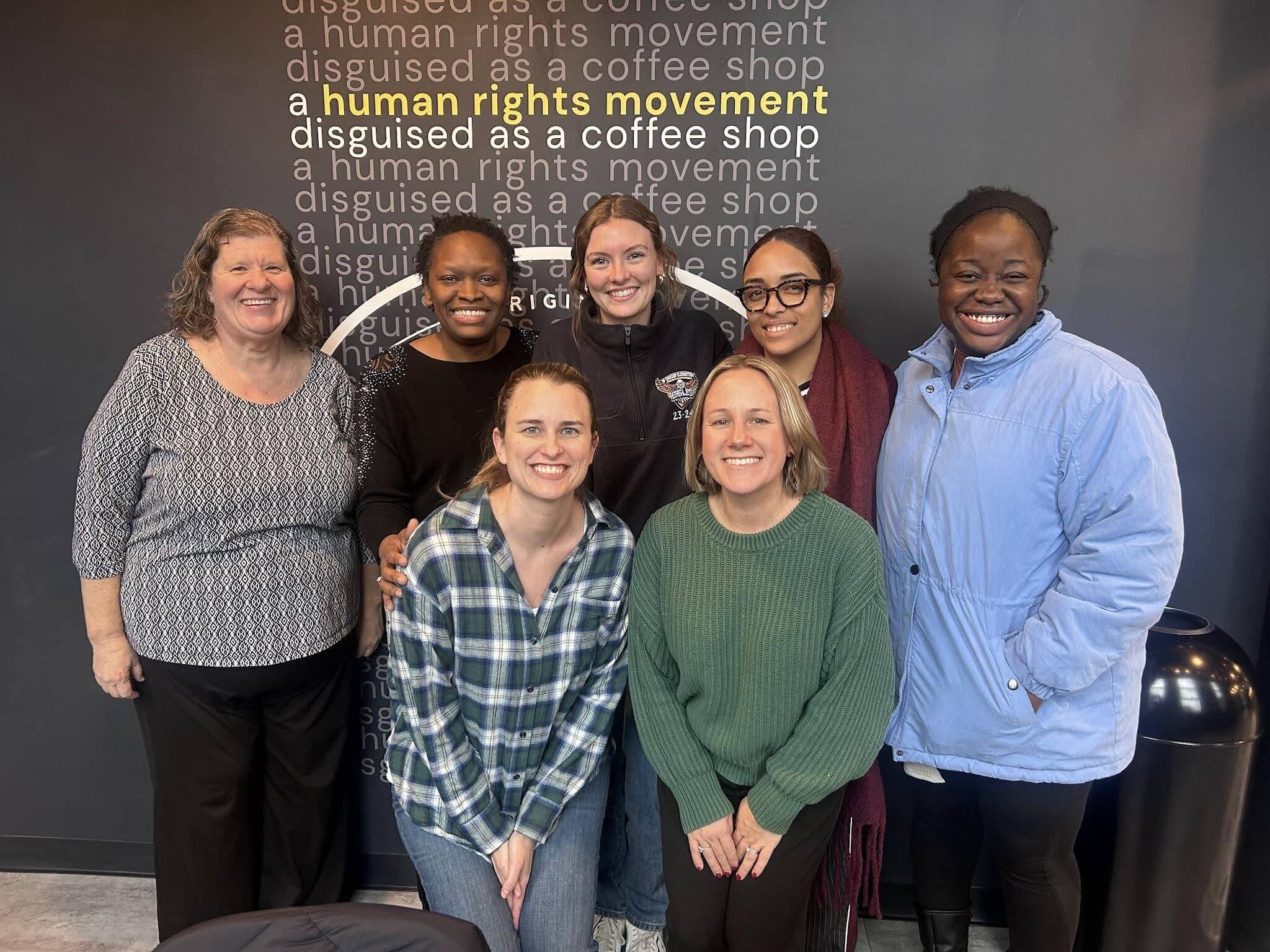 From left: Tanya Brodd, Juline Douyon, Amanda Nealy, Crystal Tejada, Amelia Kah, Lindsey Niehoff, and Laura Etkind
The work behind Anchor has been years in the making. Etkind and Brodd are part of All Means All, a national cohort of special education leaders focused on building truly inclusive school models. Through that fellowship, they studied small classroom programs in Louisiana and visited schools in Los Angeles and Denver, bringing back ideas to strengthen AF Rhode Island’s approach.
From left: Tanya Brodd, Juline Douyon, Amanda Nealy, Crystal Tejada, Amelia Kah, Lindsey Niehoff, and Laura Etkind
The work behind Anchor has been years in the making. Etkind and Brodd are part of All Means All, a national cohort of special education leaders focused on building truly inclusive school models. Through that fellowship, they studied small classroom programs in Louisiana and visited schools in Los Angeles and Denver, bringing back ideas to strengthen AF Rhode Island’s approach.
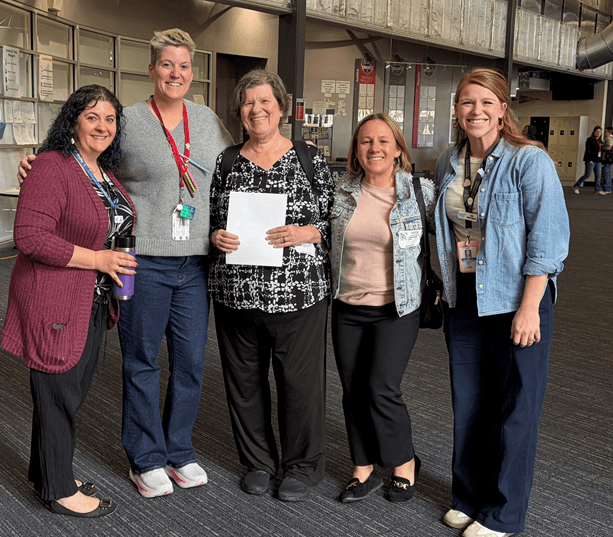 Tanya and Laura with DSST Schools learning from them and their small class program.
Ultimately, Anchor is about what students with disabilities deserve from their schools, and what becomes possible when adults design with their needs at the center.
Both Etkind and Brodd are parents of students with disabilities themselves. They know what it feels like to sit on the other side of an IEP table. That lived experience shapes what they want Anchor to be for families: not only a specialized classroom, but a community where parents feel seen, supported, and equipped to continue the work at home.
“The hardest thing as a parent is sometimes not knowing how to support at home,” Etkind says. “I really want Anchor to be a place where we create a great community with our families.”
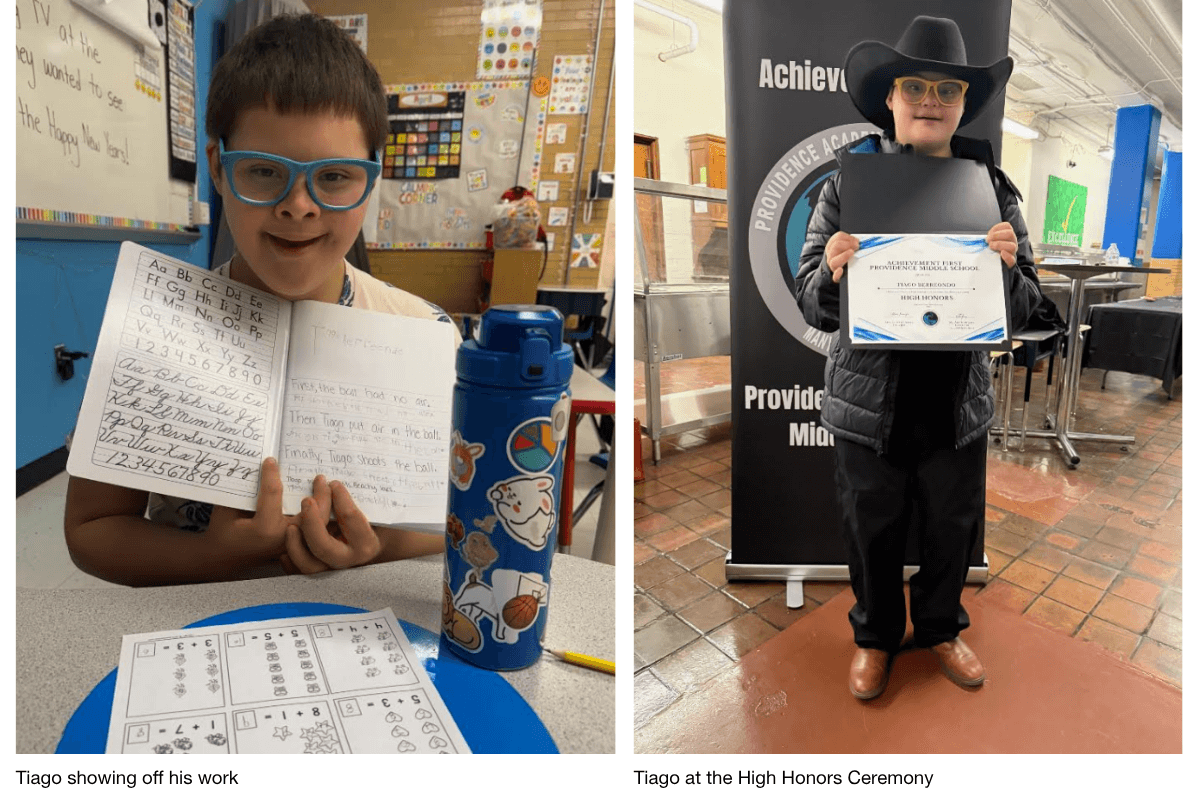
It is the same hope Tiago’s mother carried when she first came to AF Rhode Island: that her child would be included, known, and given the chance to grow.
Tanya and Laura with DSST Schools learning from them and their small class program.
Ultimately, Anchor is about what students with disabilities deserve from their schools, and what becomes possible when adults design with their needs at the center.
Both Etkind and Brodd are parents of students with disabilities themselves. They know what it feels like to sit on the other side of an IEP table. That lived experience shapes what they want Anchor to be for families: not only a specialized classroom, but a community where parents feel seen, supported, and equipped to continue the work at home.
“The hardest thing as a parent is sometimes not knowing how to support at home,” Etkind says. “I really want Anchor to be a place where we create a great community with our families.”
It is the same hope Tiago’s mother carried when she first came to AF Rhode Island: that her child would be included, known, and given the chance to grow.
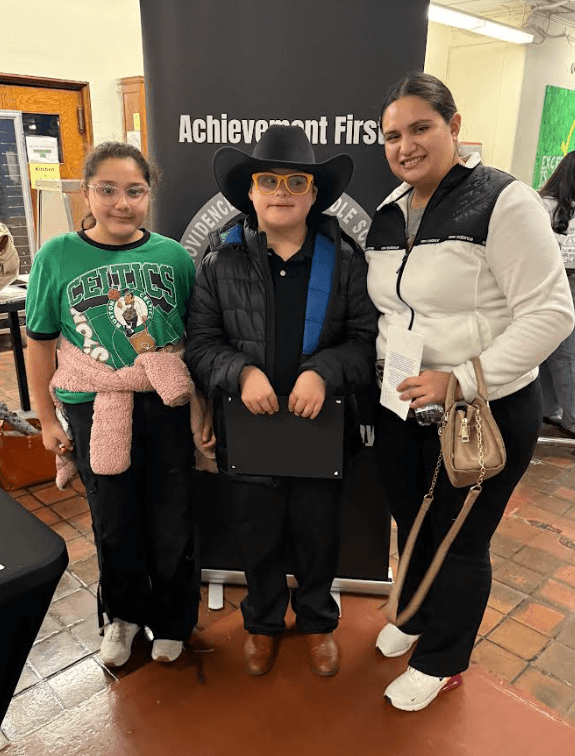 Tiago with his sister and mother.
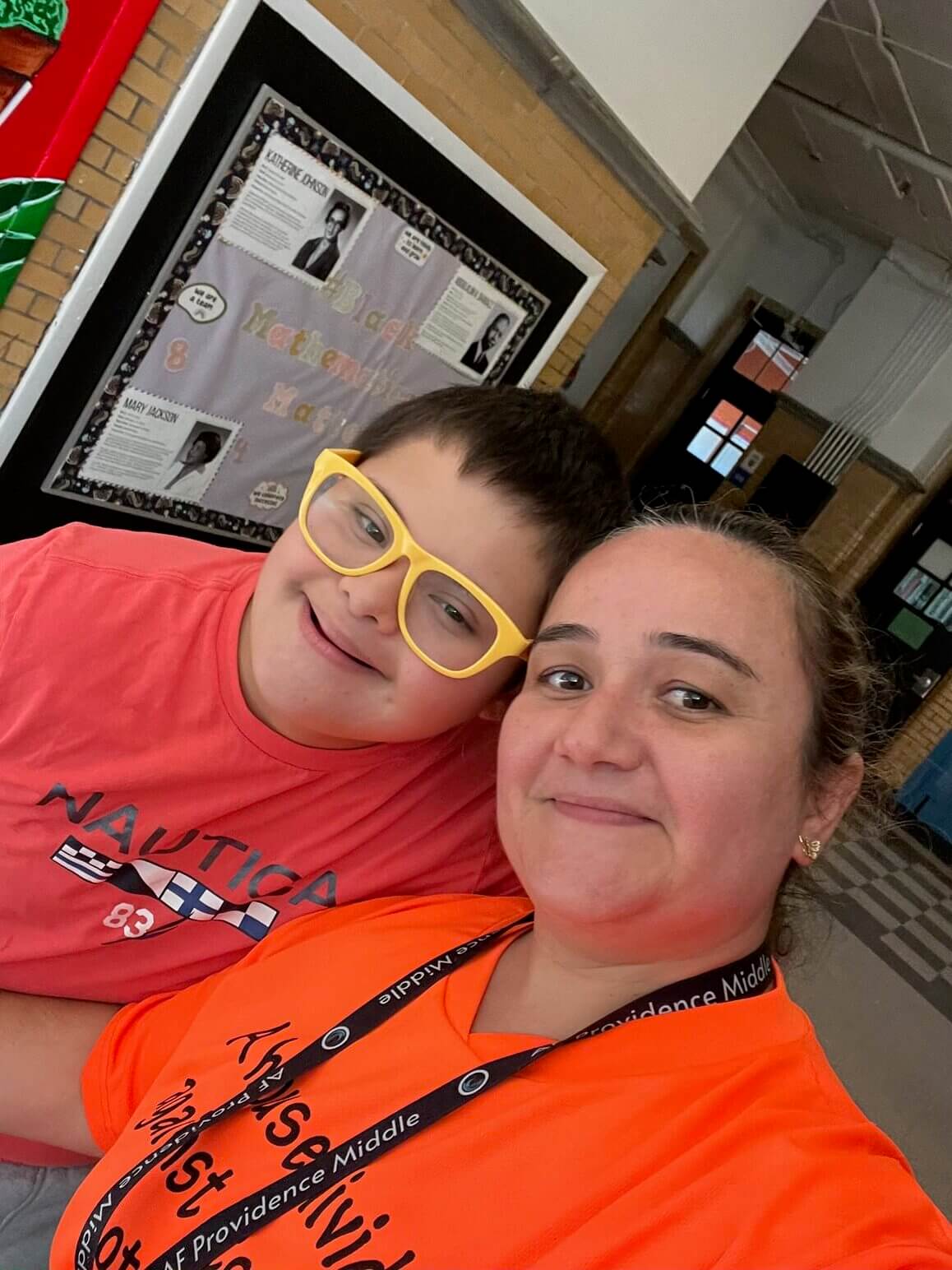 Tiago with his ParaProfessional, Lilian Vargas.
That is what Anchor is being built to offer: a place where students are met with the right supports, high expectations, and a community committed to helping them build independence, connection, and choice.
The Anchor Program will welcome its first students in the 2026–27 school year, marking an exciting next step in AF Rhode Island’s continued commitment to building schools where every student belongs and can reach their full potential.
Tiago with his ParaProfessional, Lilian Vargas.
That is what Anchor is being built to offer: a place where students are met with the right supports, high expectations, and a community committed to helping them build independence, connection, and choice.
The Anchor Program will welcome its first students in the 2026–27 school year, marking an exciting next step in AF Rhode Island’s continued commitment to building schools where every student belongs and can reach their full potential.